Something old, something new, something borrowed, something blue

From time to time, I get this saying on my mind, I guess because it has a nice rhythm to it. I know it’s a saying concerning good luck for a wedding/marriage, but it has occurred to me that it is a good way to explain migrant life. Here follows my little “analysis”, and I think it is one that most migrants can relate to.

Something old…

The old represents all the cultural luggage we bring with us. It includes among other things our maternal language, traditions, values, worldview, conceptions and so on.

When arriving in a new country, we are expected to leave, if not all of it, so at least some of it, behind. But that is near to impossible. These things are part of who we are, it’s kind of in our bone marrow. And even if some of these things might fade, or disappear, it doesn’t happen overnight.

All Norwegian kids climb on the svaberg, i.e. the rocky formation on the coast, in the summer. It’s a big part of my childhood.
Photo: TBermond

Unless we are already fluent in our new language, and have a habit of using it already, we keep thinking (and dreaming) in our mother tongue. Our mother tongue also defines our way of seeing the world, how we organise it, how we relate to others.

We also carry with us all those unexplainable rules about how to manoeuvre in society. What is polite, what is not, how to greet each other, when and with whom to be formal, and with whom we are informal. These are things that we learn from childhood, and it is hard to explain to others why it is like this. It’s just how it is.

Leaving all of this behind the moment you step on foreign soil is impossible, because it would be like erasing who you are.

Something new…

That will be about everything we experience in our new country. The language, the culture, the food, how society is organised, values, traditions, social codes… It might even include the climate and topography.

Depending of our place of origin, what is new can be right out shocking, or it can seem familiar, at least on the surface.

The beach in Nice
Photo:TBermond

In my case, the move from Norway to France seemed rather smooth at first, but I soon realised that even if the food was not that different, the unwritten and unspoken rules for socialising was indeed very different. Not to mention the language, which I didn’t master at all upon arrival.

I asked many questions about how to behave correctly, or perhaps rather why people do like this or that. But the answers remind vague until this day. With that said, little by little I have learned to manoeuver more in accordance to the rules, but I suspect that I will never master it as a native French. That’s also because at times it feels so contradictory to what I am used to, that it’s hard to adapt fully. I never want to be rude or insult someone by intention, but at the same time I find it hard to submit to social rules I find somewhat ridiculous. (Just to make it clear, I do respect the French law!)

In any case, as years have gone by, I have adopted a lot of French habits. It’s hard not to, when it’s part of your everyday life. And being married to a French, and raising our kids here, it feels only natural to adapt to my new environment.

Something borrowed…

It will be a natural continuation of “something new”, and the most important thing that we “borrow” when we arrive in a new country is the language. It’s the key to get to know people and to understand what’s going on both “big scale” (society) and “small scale” (local life, everyday life).

For some, learning a new language is easy. They arrive, and voilà, they master the language after a few months. That must be so fantastic, and people like that really impress me big time! But unfortunately it doesn’t work like that for most of us. We don’t go to bed one evening, and wake up the next morning speaking our new language fluently. It takes time, and it takes patience. Not just for the newcomer, but also for the others.
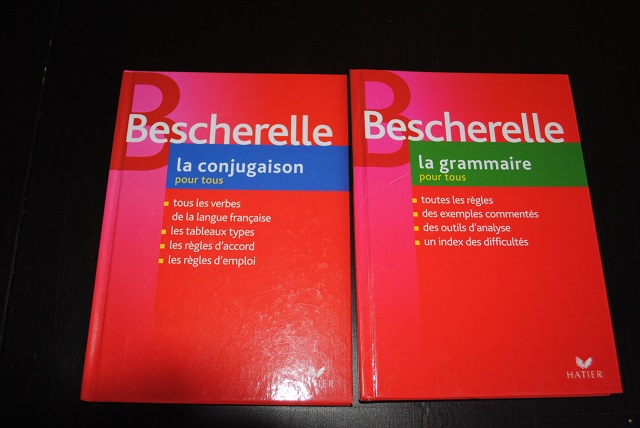
To be honest, this is not my preferred books! But they are very useful, along with my dictionary and the litlle book with Franch verbes listed.
Photo: TBermond

When I was still struggling a lot with the language, I got so upset with people who didn’t care to speak slowly, and who didn’t care to make an effort to understand me. I knew I made plenty of mistakes! I pronounced words wrong (I still do!), my grammar was horrible (it’s getting better). But I made an effort, and I just wanted people to understand that. When I got to know people who appreciated me learning their language, when they took effort to speak in a way I would understand (simple phrases, speaking more slowly), and gently correcting me, I was so grateful! And that made a big change in my progress.

The longer you stay in a new country, the more you pick up “their ways”. As mentioned above, it feels natural to adapt elements from the new culture as time goes by. And even things that seem strange in the beginning, becomes a natural part of life. Maybe you don’t even really notice these small changes at first, but they become evident when you go back to visit your home country. It can be the way you organise the day, or what you prefer to have for breakfast or dinner. Or the way you interact with other people. Myself, I have happily adopted croissants for breakfast, the ritual of aperitif, or apéro as they say, and cheese after dinner. None of this is common in Norwegian daily life.

Miam mian! Looks good, no?
Photo: TBermond

Something blue…

Every migrant knows that there are moments, short or long, when we feel bewildered and lost. Moments when we don’t manage to make ourselves understood properly, when we have this mixed feeling of anger and sorrow because we want to say something, but we lack the words. All the conversations we miss out on, because we don’t manage to articulate our views in our new language.

Moments when we feel utterly homesick, and just want to jump on the first plane to our native country. When family and friends could just as well have been on the Moon, because they are no longer where we are. Phones are good, but it’s not the same as sitting face to face.

When we realise that friends got lost, because it turned out to be too difficult to keep in touch when the geographical distance got too big, and daily life is too full of whatever needs to be done.

When we feel like having a proper conversation in our mother tongue, to discuss something important in life, but there’s no one around.

When something out of the ordinary happens, and all we want is to be close to our family and friends, but it’s not possible. Like when someone in the family turns sick, or dies, or someone is celebrating an anniversary or wedding, and we are not able to attend.

One of my favourite places in Norway.
Photo: TBermond

Feel free to leave a comment it you have something you would like to add or experiences you would like to share. Wish you all a nice day!
Den internasjonale kvinnedagen 2022

Dagen er her, den internasjonale kvinnedagen 2022. Noe fremgang har det vært det siste året, abort er legalisert i Colombia, Mexico og San Marino. Samtykkelov, som definerer sex uten samtykke som voldtekt, er innført i en rekke europesike land, blant dem Danmark, Sverige og Island. Andre land vurderer også oppdatering på utdaterte lover som gjelder voldtekt. Disse landene er Finland, Nederland, Spania og Sveits. I 2021 bestemte omsider norske politikere seg for at Norge også skal få en samtykkelov. For et land som hevder å være best i klassen på likestilling, var det på høy tid!

Dessverre er det sånn at selv om det har vært fremgang på enkelte områder, så har det gått i revers på andre. Etter to år med pandemi har andelen jenter under utdannelse gått kraftig ned. Vold i hjemmet har økt, noe som først og fremst rammer kvinner og barn.

Tilgangen til helsetjenerster for kvinner, spesielt angående reproduktiv helse og abort har mange steder fallt helt bort, og er blitt sterkt redusert andre steder.

Etter Talibans overtakelse av Afghanistan, har jenter over 12 år mistet retten til å gå på skole, kvinner har mistet retten til å arbeide, og kvinner får ikke reise med offentlig trasport uten å være i følge med en mann. Tjue års kamp for kvinners rettigheter i Afghanistan, alt som var oppnådd, ble blåst bort over natten da Vesten lot Taliban få komme tilbake til makten.

I Etiopia brukes seksualisert vold, spesielt mot kvinner, som et våpen i krigen. Både etiopiske og eritreiske soldater er skyldige i voldtekter og andre seksuelle forbrytelser mot kvinner i landet.

I USA har abortmotstanderne vunnet stadig mer terreng, og ingen har kunnet unngå å få med seg at staten Texas har innført tilnærmet totalforbud mot abort. I juni 2020 kommer abortspørsmålet opp for høyesterett i USA, og tilgangen til trygg og lovlig abort står dermed i fare i hele USA.

Krigen i Ukraina viser oss nok en gang hva en humanitær katastrofe innebærer for kvinner og barn. Denne krigen føyer seg inn i den sørgelig rekken av land hvor befolkningen allerede lider, som I Jemen, Afghanistan, Etiopia, Myanmar, Syria…

Kvinnekampen handler om så mye mer enn likelønn og fordeling av foreldrepermisjon. Disse sakene er også viktige! Men det faktum at vi i Norge og Europa har gjort store fremskritt på disse områdene, betyr ikke at kampen er over. Fremdeles er det millioner av kvinner og jenter der ute som har behov for at vi også fortsetter å holde fokus på saker som lik rett til utdanning og arbeid, at vi fortsetter å jobbe mot barneeksteskap og omskjæring, bedre rettsvern for voldtektsofre og kvinner på flukt, for sikker tilgang til trygg og lovlig abort, sikker og trygg tilgang til prevensjon, og tilgang til forsvarlige helsetjenester, for å nevne noe.

La oss jobbe mot en bedre verden, for absolutt alle, ikke bare i dag 8. mars, men hver dag hele året!

Kilder:

Rapport fra Amnesty Internasjonal i anledning kvinnedagen 8. mars 2022

https://samtykkelov.no/internasjonal-oversikt

8 March 2022

Another 8 March. And still we have to march and speak up for women’s rights. For our right to control our own bodies. Our reproductive health. For our right to marry of our own will, when we come of legal age, and not as child brides. We have to fight for maternity wards and access to mid-wives, for contraceptives and informed family planning. We have to fight for access to free and safe abortion. For equal status and equal rights. For women’s health to be taken as serious as men’s health.

It is true that in some countries women has fought and won certain rights, and that on paper there’s equality between the genders. But putting something on paper, doesn’t mean it works like that in real life. Men are still over-represented in higher positions. Women are still over-represented in low-income jobs and part-time jobs.

Women are still being labelled “hysterical” if they speak in a loud voice and gesticulate, while a man is deemed to be “powerful”. Girls are still taught to be nice, gentle and caring, while boys are expected “to be boys”.

Women are still blamed for sexual assault, when in fact they are the victim. They are asked questions about their way of dressing, and their behaviour. Because they must have done something to attract a man’s attention. When in fact it’s the man who has shown no respect for the woman.

I write this while there is an ongoing war in Ukraine. A war set in motion by Putin. I cannot even start to imagine the horrors the Ukrainian people are living right now. Parents, grand-parents and children taking shelter from the bombing. Heroic women and men fighting the Russian army.

As we march for women’s rights on this particular 8 March, let us also march for all the innocent victims of this war, and every other war. We are women, we are able to carry two thoughts at the same time, and to multi-task!

International Safe Aborion Day

Today it’s the International Safe Abortion Day, and I wish it was not necessary to have such a day in the calendar, because safe abortion should be granted to every single woman in need of one. With that said, I hope putting focus on this will be for the good.

While progression has been made in some countries over the past few years, like in New Zealand, South-Korea, Argentina, Ecuador, Thailand and Ireland, other countries have taken a step backwards.

In Texas a new law, making abortion an act of crime, has been passed. Even if President Biden has promised to protect the clinics, this is a horrible development in one of the world’s most developed countries.

Religious and archaic cultural views should not dictate women’s right to control their own bodies and reproductive health. In line with the same outdated views, comes the lack of sexual education, education on reproductive health in general, and not the least, the lack of access to contraceptives.

On top of that, we can add a general lack of respect for women, and the fact that it’s the women who are punished to breaking the law by getting an abortion, while the perpetrator gets away unpunished.

The result of all this are tens of thousands of unsafe abortions every year. Women die during or after these procedures, approximately 22 000 every year! A lot more suffer from long term complications, and many are never able to get pregnant and have a child later.

This is not acceptable, it never was, and it certainly should not be acceptable in 2021!

We cannot keep silent about this. We have to keep fighting until every woman on this planet has the right, and the access to safe abortion and safe post-abortion care.

#InternationalSafeAbortionDay

For further reading:

International Safe Abortion Day: 28 September 2021: First Call to Action

https://www.who.int/news/item/28-09-2020-international-safe-abortion-day

https://www.who.int/health-topics/abortion#tab=tab_2

Afghanistan, now what?

It’s been six weeks since Taliban took Kabul, in a swipe that surprised everybody, including American intelligence. The international soldiers, diplomats and others rushed out of the country. Yes, I know, President Biden had said that American troops would withdraw from Afghanistan within September 1st. But the plan, I assume, was not to hand the country over to Taliban.

Well, that is what happened, and now I wonder what will happen next. We do have some indications already. Women have disappeared from the streets, and those who are to be seen have put back the burqa. Female police officers are killed by the Taliban. Single women are forced to give up custody of the children to their in-laws. Women-only households are at even higher risk of being forced into marriage with Taliban soldiers. In many places girls’ schools are already closed, women are denied showing up at their workplace.

Activists, journalists and former soldiers are hunted down. The Taliban goes door-to-door to find them, and those who can hide or flee.

The UN estimates that 500 000 people will flee to the neighbouring countries before the end of the year. Worst case scenario they call it. I am, frankly speaking, surprised the estimation is not much higher. We are talking about a population of 38 million people.

The UN also says that 14 million people are at risk of starving to death. Normal people don’t have money. A lot have lost their jobs. The World Bank and International Monetary Fund has frozen the aid that has been flowing into the country for years. The World Bank states this is because they are worried about Taliban’s treatment of women. But who do they think a lack in health services and food shortage will harm first and foremost?

The army, the police force and all other people trained by the NATO troops, fled at the sight of Taliban troops. Was their training that bad? Or their moral that low?

The elected president and his government fled as well while they had the chance. Did they think that NATO would be present indefinitely to protect them? I ask, because I suspect that they were more interested in enriching themselves than actually govern and rebuilding the country.

I am worried about the situation, especially the situation for all the Afghan women and children. At least during the last 20 years, the literacy rate went up. A lot of girls got an education. Now it seems for nothing.

After hunting down Taliban and Osama bin Laden (who turned out to be hiding in Pakistan), there was a lot of shifting motives to keep NATO present in Afghanistan. Building a democracy, building schools, working for women’s rights, and the previously mentioned training of police and army.

I never felt it very honest, the reasons to stay on. At the same time, it seemed better for the Afghan population to keep the Taliban at bay. At least, the day all the troops left, we got the truth; the Americans didn’t stay on in Afghanistan for 20 years to rebuild the country or fight for human rights and women’s rights. They stayed “to keep America safe”.

Now, it seems to me that the world gives a damn about what is going to happen next. Statements like “we are worried about the situation” doesn’t seem very reassuring. I fear that as soon as the cameras are off and the journalists have left the room, world leaders let Afghanistan fall to the bottom of the to-do list.

Sources:

https://www.theguardian.com/global-development/series/women-report-afghanistan
Several of the articles listed here are used as sources.

https://www.reuters.com/world/asia-pacific/half-million-afghans-could-flee-across-borders-unhcr-2021-08-27/

https://www.aljazeera.com/features/2021/9/12/men-dont-protect-us-they-wont-respect-us-afghan-diaries?fbclid=IwAR1DxuAOvjJakAyxyPeSJZ8aQuzQkUcUB4kLsy8ROhXAzX3JEPB5gjkn1sc

https://www.nrk.no/urix/folk-i-afghanistan-star-uten-jobb-og-ber-om-hjelp-fra-det-internasjonale-samfunnet._-1.15664045

https://www.bistandsaktuelt.no/nyheter/2021/afghanistan—bistandsfrys–stenger-jenteskoler/

Dreaming…

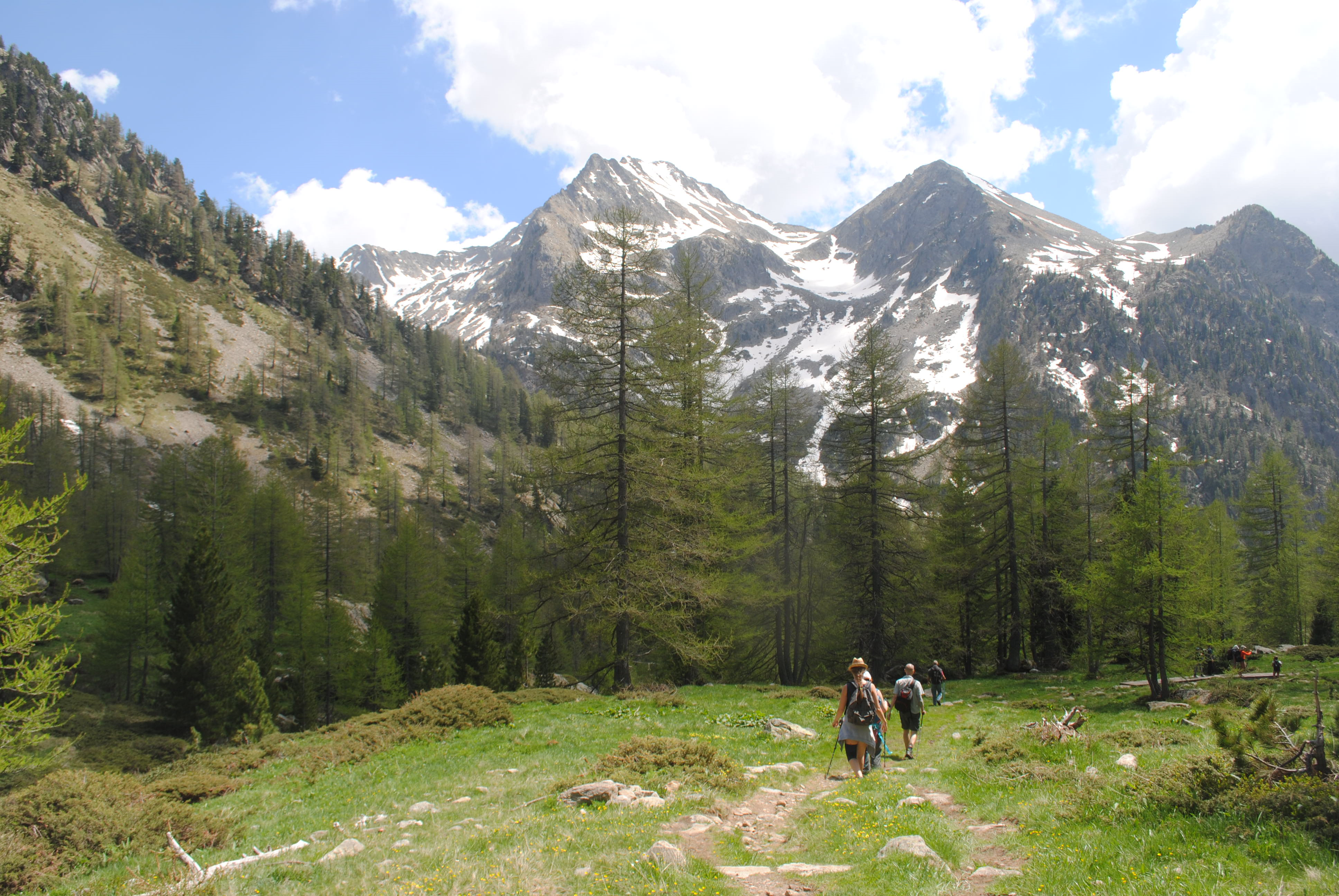
What has become tiresome lately, is the limitation which is set on movement during daytime. In addition to curfew at 7 pm every evening, we are not allowed to move more than10 km from home… The longing for the mountains, and for a hike somewhere not too crowded with people, is getting stronger every day. Hopefully we have only one week left now, and then…..  

Mercantour, Alpes-Maritimes, France

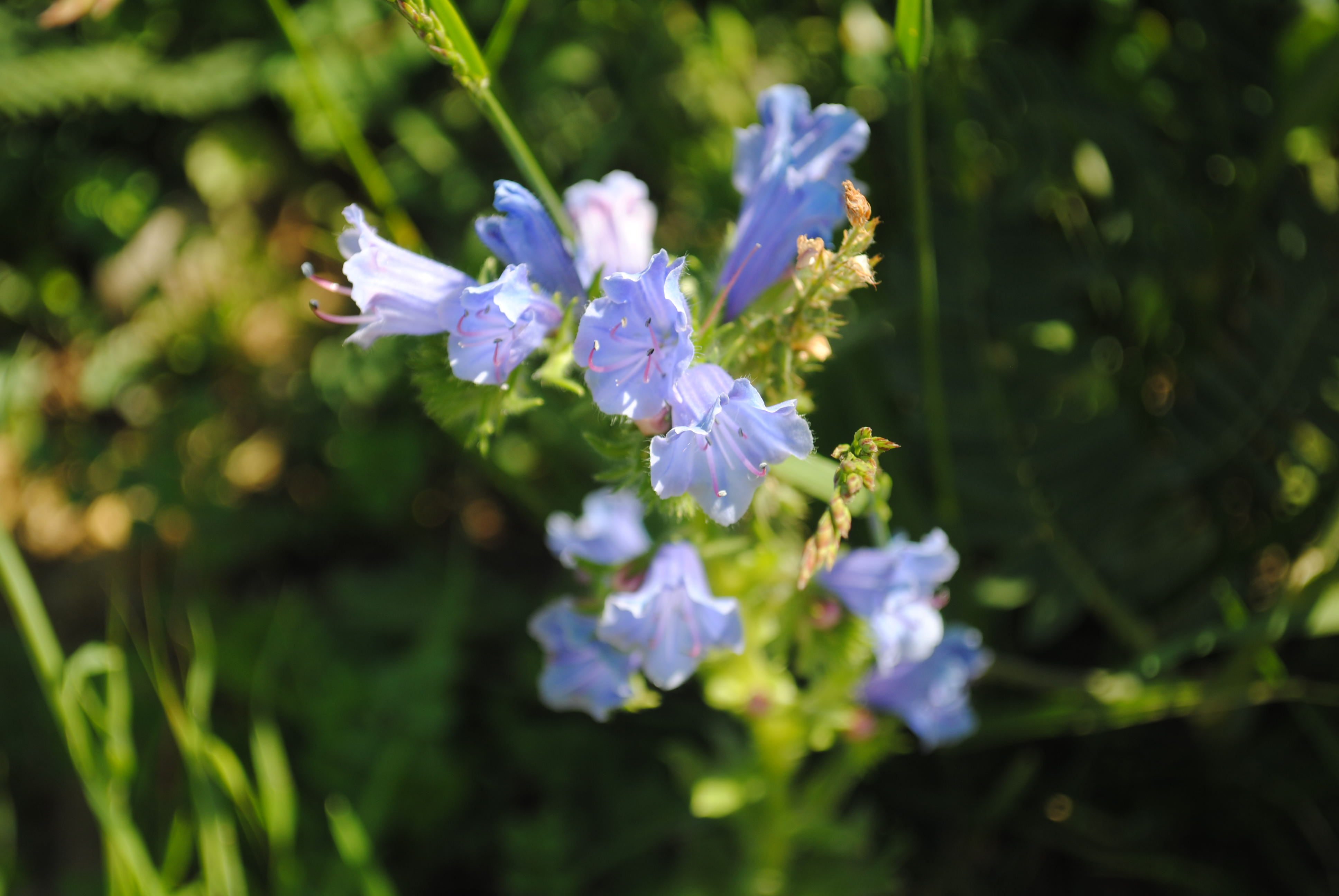
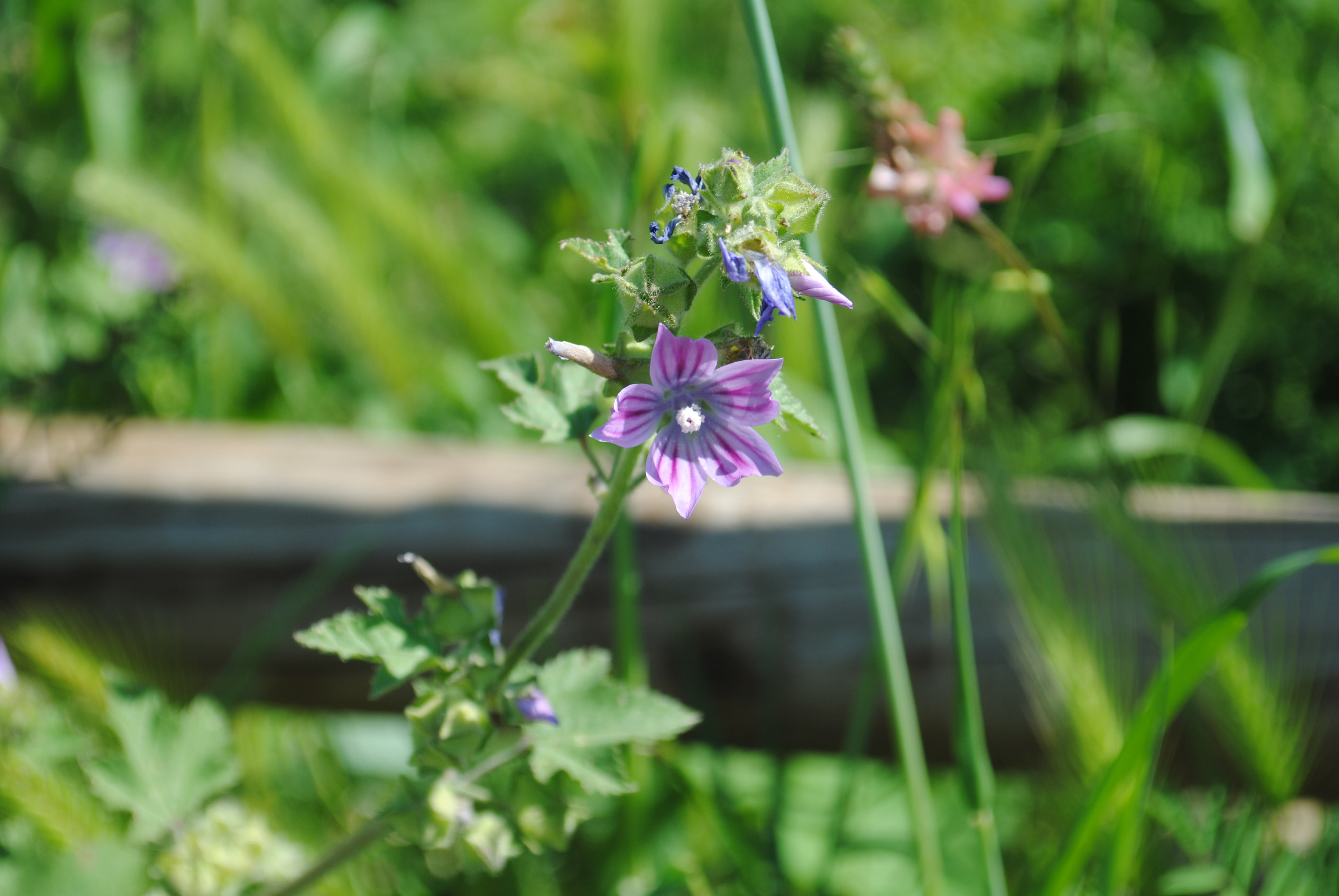
In the meantime, while waiting for this to come true, I do my best to take pleasure from our nearby surroundings.


When walking the same paths every day, I try to pay attention to the details, as a way to “change the scenery”. And now in spring, there’s always new things to see 🙂

“The most important is to have fun!”

I would like to write a few words about women that inspires me. Actually, it’s quite a few of them, so I won’t write about all of them at the same time. They represent everything from politicians to actresses, from intellectuals to explorers. They are young, or not so young. They are my contemporaries, or long deceased. But they all stand out, in their own way. Some of them you might know already, others perhaps not. They represent a great variety of women, because we are all different, and we chose different paths in life.

Today, I want to present Cecilie Skog, who has climbed Mount Everest and K2, and a lot of other mountains. If that wasn’t enough, she has reach the South Pole, the North Pole and crossed Greenland several times on skis.

The more I read about Cecilie, the more I like her philosophy. It has never been important to her to be the first, or the fastest or the toughest. The important thing is to enjoy doing it! It’s about the value you put in doing it. She puts it this way: “I don’t go out there (on an expedition) to hurry home”.

cecilie skog - Google-søk | Beauty, Women, People
Cecilie Skog. Picture from Pinterest

Cecilie Skog inspires me, not because I dream about climbing summits more than 8000 meters high, or put my skis for a trip across Antarctica. She inspires me because she had the courage to follow her dreams.

After getting her degree as a nurse, she worked six months in a hospital, before she felt an urge “to get fresh air”. She took some weeks leave, went to the mountains, and decided it was outdoor she preferred to be. I admire her courage to change plans. To leave a safe job and to find a new path.

Now as a mother, she has kind of changed path again. The need to climb the highest mountains is gone, the urge to cross the ice is gone. It’s replaced by a drive to introduce her children to all the pleasures nature can give you. It’s the quality of time spent outdoors that count, not how many kilometres you walked or how high you climbed.

I think it is important to be reminded from time to time, that it’s quality, not quantity that counts. Especially when it comes to everyday life.

International Women’s Day

As always, there are things to celebrate, and still battles to fight when it comes to women’s rights.

Let’s start with some good news:

Argentina changed its abortion laws in 2020, ending a total prohibition on abortion. Several other countries have also changed their abortion laws in recent years, like Ireland, Australia and New Zealand.

In Kenya, 40 clan elders have decided to stop child marriages and to end female genital mutilation and other forms of gender-based violence. This is important, and progress is made in other countries as well.

In many African countries, education on women’s reproductive health, family planning and access to modern contraceptives are on the rise. This in turn will reduce the number of (unsafe) abortions, and allows the women to take control over their own bodies and their own reproductive health.

Further, more than 100 nations reignite the vision of the Beijing Platform for Action, the most comprehensive roadmap for advancing gender equality.

Emmanuelle Charpentier and Jennifer A. Doudna were awarded the Nobel’s Price in chemistry. Kamala Harris was appointed the first female vice-president in the USA, and Gitanjali Rao was selected TIME Magazine first ever “Kid-of-the-year”, for her use of science and technology to promote social change. And I tell you, what a girl this is!

But despite progress, there are still battles to fight.

Honour killings, in particular a threat to girls and women, are still a widespread problem especially in South-Asia and the Middle-East. As of late, an Indian 17-year old girl was beheaded by her own father after he discovered she had a relationship with a man.

In India, as in Pakistan and Afghanistan and several other countries, women are often married off to the man who raped her. This is a horrific practice, and something that needs to end immediately.

In Poland, a country at the heart of Europe, and member of the European Union (EU), abortion is now prohibited. The law passed in parliament in 2020, despite large protests.

Abortion is also prohibited in the following European countries: Malta (also member of EU), Andorra, the Vatican and San Marino. A complete overview of the situation worldwide can be found here.

Both access to healthcare and education are under pressure during the covid-19 pandemic, and we have to make an effort so we don’t take many steps backwards now that progress has been made in many countries.

But even in western societies we now see family life returning to old stereotypes, where women take on a greater toll of housework, whether they are still working during the pandemic or not, compared to their spouses. We have to make sure that the years of 2020 and 2021 will not be the new norm, but still work for equality both in the domestic and professional areas.

We need to work to put an end to the misconception that girls and women are the property of men, unable to act on their own. Girls and women are individuals, fully capable of making their own decisions. No girl should be raised solely to be married off and being treated as a slave of the household and a birthmachine. This is why it’s so important to make sure they are given access to education.

We also have to work to improve the balance of representation of power, both in parliaments, but also in business corporations. Even in developed countries, men earn more, they own more, and they more often climb “to the top”. We have to get rid of the stereotype that men are better at making money, while women are better at taking care of the family. Men can be good caretakers, and women can certainly be good leaders.

I would like to end with a quote of Barack Obama, even if it would have been more appropriate for the day to quote a woman. Still, this one sums up the way forward pretty well.

“You may live in the world as it is, but you can still work to create the world as it should be.”

So let’s do that! In the spirit of all the women that has fought battles before us, and for all those coming after us.

Speak up, take action – and have a great day!

International Women's Day web banner illustration of woman hands holding each other in female symbol shape. Girl teamwork concept, modern flat cartoon outline arms.

It’s women’s right to make safe choises

We’re still in the middle of the pandemic, and most of us are probably more concerned about what we can do or not do these days, than we are concerned about things not directly related to our lives. I’m no exception, really, but in the end all I can do is live day by day and make the best of it.
But even if we are not so concerned about people far away these days, or concerned about other topics than the pandemic, things do happen around the world every day.

One of those things are unsafe abortions. Each year there’s an estimated 25 million unsafe abortions. That’s 68 493 abortions per day. 68 493 women and girls risking their lives.

As a matter of fact, unsafe abortions is one of the top five reasons why pregnant women die. And things haven’t become any better during the covid-pandemic. Estimates adds another 3 million unsafe abortions to the already high number, thereby adding several thousand women risking their lives because of an unwanted pregnancy.

The official number of girls and women who die from unsafe abortions is approximately 22 000 each year, but the number is probably larger. 7 million get complications after going through an unsafe abortion, many of these complications have severe impact on the women for the rest of their lives, and many will never be able to conceive again.

In the year of 2018, Doctors without Borders/Médecins sans Frontières treated 24 000 women for complications after unsafe abortions.

But what is an unsafe abortion? It is defined as an abortion without qualified, medical assistance, and/or in unhygienic and unsafe surroundings.

Some of the means used to end the pregnancies are herbs meant to provoke the body to reject the foetus, long and sharp objects, and chemicals injected into vagina to kill the foetus.

Why do women put themselves through this?

There’s no simple answer to be given, but most women seeking unsafe abortions are poor women. This should come as no surprise. Poor women do not have the means to seek professional help, or to go somewhere where abortion is legal and safe, if they live in a country where abortion is illegal. Neither are they given crucial and educative information about alternatives, family planning and prevention. As a consequence these women go through more unwanted pregnancies, and therefore more unsafe abortions.

In countries guided by strict religious legislation regarding abortion, but where abortion is still legal, many doctors refuse to perform abortions as they find it morally unacceptable.

In some countries, like El Salvador, abortion is illegal by law, even if the mother’s life is in danger. Women are given prison sentences, up to 50 years, if they are caught having had an abortion. Even if they lose their baby involuntarily after complications during the pregnancy, they risk several years in prison.

Another reason, is that professional medical aid is simply not available. In many countries, health clinics and hospitals are far away from where the women live, and when they do have access to them, the facilities are poorly structured. Having a safe abortion might seem impossible.

There is also the question of financing. Each time there’s a republican president elected in the USA, they usually impose the global gag rule, which means they cut of financial support to all organisations that informs, guides women and perform safe abortions. This has a huge impact of women’s reproductive health. The rule is usually reversed when there’s a democratic president elected. The global gag rule was last imposed by Trump, and then reversed as soon as Biden took office.

A lot of countries have very strict laws regarding abortion, making it practically impossible to have a safe and legal abortion, even if the pregnancy is the result of rape or incest, or even if the girl is minor. But the thing is that strict laws do not prevent abortions! And these laws more often than not, go hand in hand with a lack of information about family planning and reproductive health in general. In the same countries we often also see high levels of gender based discrimination and violence against women. So the combination of lack of information, lack of access to prevention, lack of access to safe abortions and gender discrimination is a deadly cocktail for the women living here. It is also why the countries with the strictest laws regarding abortion have the highest abortion rates.

So what can we do about this?

First of all, we must never stop addressing the issue, and put pressure to grant women access to adequate information regarding their own reproductive health and family planning.

We must ensure that organisations and health facilities have the sufficient financial support to inform women, educate them and provide a safe environment to perform abortions.

We must support groups and organisations that work to improve women’s status, and to end gender based discrimination.

As individuals we often feel powerless, but we can raise our voices and speak up about this. And we can support various organisations financially. There are many organisations working within this area, and I’m sure you can find one that you see worthy of your support, whether it is UN supported organisations, or independent ones as Doctors without borders, Amnesty International, Red Cross etc.

Doctors without borders runs clinics and work with the issue on site in the field. Amnesty International puts pressure on governments to end unjust laws and to stop putting women in prison for a miscarriage or an abortion.

I have given just a very few examples of the organisations dealing with these problems, you are welcome to add to the list.

A huge step backwards

I just finished reading Ken Follett’s second volume in the trilogy “The pillars of the earth”, “World without end”. It takes place from the1320’s to the 1360’s, in other words in the Middle Ages.

In this period, women were seen as the property of men, their fathers, their husbands. An aristocratic widow could be ordered by the king to remarry someone chosen by him, the king. Women were seen as inferior, creatures with no brains, or at least not capable of coping with matters such as theology and medicine. These were subjects studied my men only, and more, only by monks and priests. Nuns were acting as nurses, but with no authority to even question the “cures” prescribed by the priests. And the priests were clinging to the old methods, refusing any change, so they could keep their power and stay superior.

We like to believe that we have come so much more forward these days. We’re living in 2020, and women are working as doctors, lawyers, scientists. They are even astronauts!

Women, in the western part of the world at least, marry a man of their own choice, or a woman of their own choice. We decide whether we would like to have babies, or not. Or do we?

I follow the news on the subject of a candidate for the US Supreme Court. And I become astonished, and disgusted, even if there is probably no reason to be so, looking to the bunch of conservative, old men having a say over there these days. Not to mention the one guy that only do what benefits him and his family, because he has no scruples, no moral and no other goal than enriching himself. Well, enough about him.

What I did want to say, is that looking to the country, which motto is “Land of hope and glory”, I find no hope and no glory at all.

I find Christian conservatives, who live by (extreme) double standards. I find they want to reverse the right to free abortion and the clinics offering family planning advice. I find they want to make it harder by the day to be anything but a white, heterosexual Christian. Preferably a male…

Their whole society is constructed in a way that gives women not many opportunities but to quit her job when she gets pregnant, because the cost of kindergarten is so high. Unless she’s a single mum, of course, who has to take on three jobs to feed her kid(s).

I read Ken Follett, and I see that we are still living in the Middle Ages in many respects. So I mentioned USA. We can take a look to some Asian and Middle Eastern countries, where women are STILL viewed as the property of their fathers and husbands. Where a woman’s testimonial is not worth anything, and where she can’t even leave the house without male escort. Where girls are deprived systematically of education, and only given the last scraps of food after the males of the family have finished their meal.

But even in Europe, who likes to think of themselves as progressive and modern, we find that women are systematically paid less for doing the same work as men. We find that they work more part-time to find room to take care of their family, or they stay at home for a longer period of time for the same reason.

I wonder when, if ever, women will be valued at the same terms as men? When will we be considered equal?

I read a story on a Norwegian news site about a conservative priest, a protestant priest even, that refused to worked with a female priest! There have been female priests in Norway for several decades! There’s even female bishops… And this was not recycled news from the 1960’s, it was like a week ago. In September 2020. In Norway, where mothers and fathers take equal leave to take care of their baby its first year, male priests still refuse to work side by side with a female colleague.

We might have come a long way in many respects, but we’re not done, by far.

It might seems odd that I, a Norwegian living in France, takes such an interest in the nominee for the Supreme Court in the US, but it’s quite simple. The US is, or at least wants to be, an example to the world. They want to export their democracy (which is not very democratic, and which is about to crumble to pieces if the sitting president is re-elected), they want to export their values. But right now they risk taking on something that will legitimize the suppression of women worldwide.

Why would conservative countries improve the lives and opportunities for their girls and women, or allow abortion, if the leading state of the world is going backwards? It will rather support the status quo.

Too many women risk their lives every day because they have to go through illegal abortions, performed by people with no or little medical training. Or they risk lifetime in prison if discovered. Making abortions illegal is not going to stop women from having them. Reversing the right to free abortions is not the way to go.

Choosing a religious fanatic to replace Ruth Bader Ginsburg on the Supreme Court is an insult to all women, not only in the US, but to the rest of us as well.